

Torque Meter Frequently Asked Questions
Question number FAQ-1271
Is it acceptable to install the detector vertically? What precautions should be taken during the installation?
It is possible to install the detector vertically. However, please limit the load to approximately the weight of the coupling.
Similarly, it is also acceptable to install the detector on the side, upside down (on the back), but ensure that the mounting surface has sufficient strength and consider ease of cable extraction and maintenance during installation.
Please set the centering accuracy to 2-3/100 mm.
Below are some general installation examples.
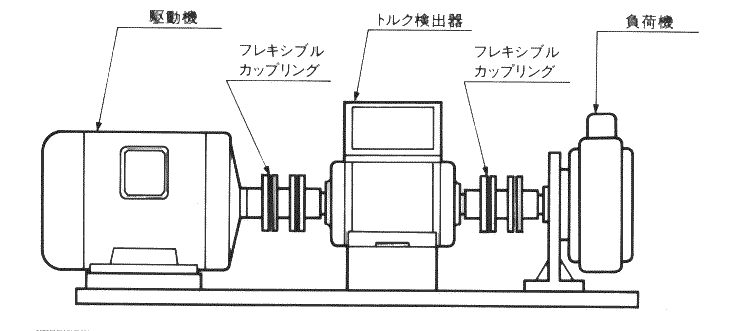
(1) When there is no fluctuating load on the axis
Connect to external devices using a flexible coupling.
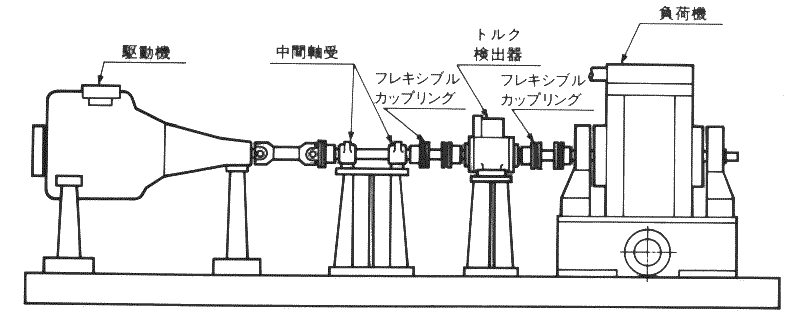
(2) When variable loads are applied to the axis
Insert an intermediate bearing to prevent variable loads from being applied to the shaft end of the torque detector.
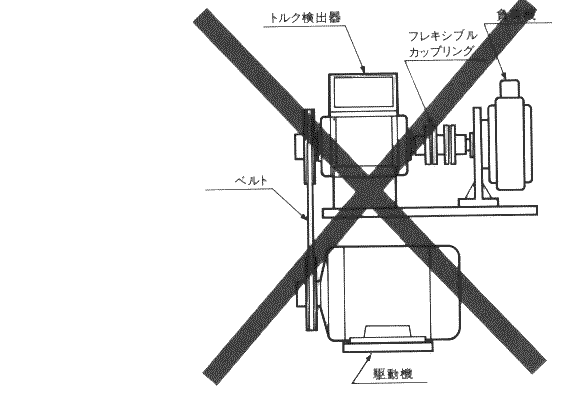
(3) Prohibition of drive by belt, chain, and gears
As shown in the figure below, if a pulley for belt drive, or a sprocket or gear used for a chain is attached to the axis of the torque detector to directly transmit power, a large load will be applied to the axis of the detector. This not only adversely affects the measurement of torque but may also damage the bearings supporting the axis.
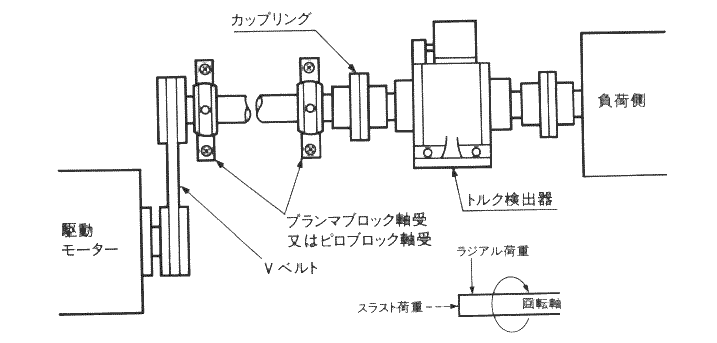
By inserting an intermediate bearing between the detector and the drive motor as shown in the figure below, it is possible to measure accurately without causing bending in the axis of the detector, even when tension is applied to the belt driven by the V-belt.
(4) When installing vertically
The detector can be installed and used vertically. Please consider (1) to (3) when setting it up.
Again, please consider that the thrust load on the detector should be at the level of the coupling weight of the torque detector being used.
Last updated: 2000-06-09