

Ono Sokki Co., Ltd. (President: Yuji Okoshi), a manufacturer and seller of electronic measuring instruments, will launch the "O-Solution/DS-5000 Sound Power Level Measurement System" on Thursday, April 23, 2026, to contribute to noise reduction in all types of industrial products.
-
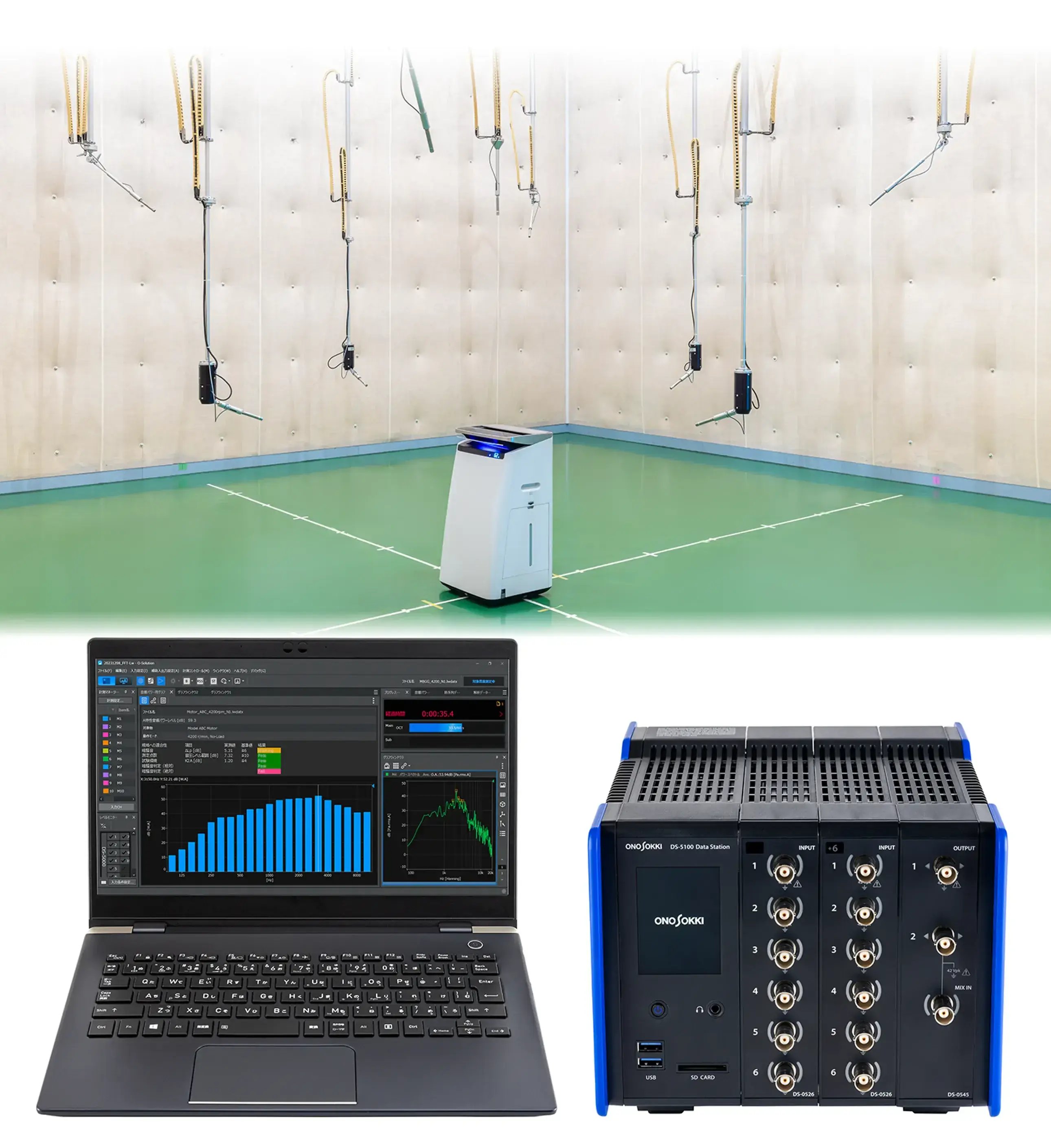
O-Solution DS-5000 Sound Power Level Measurement System
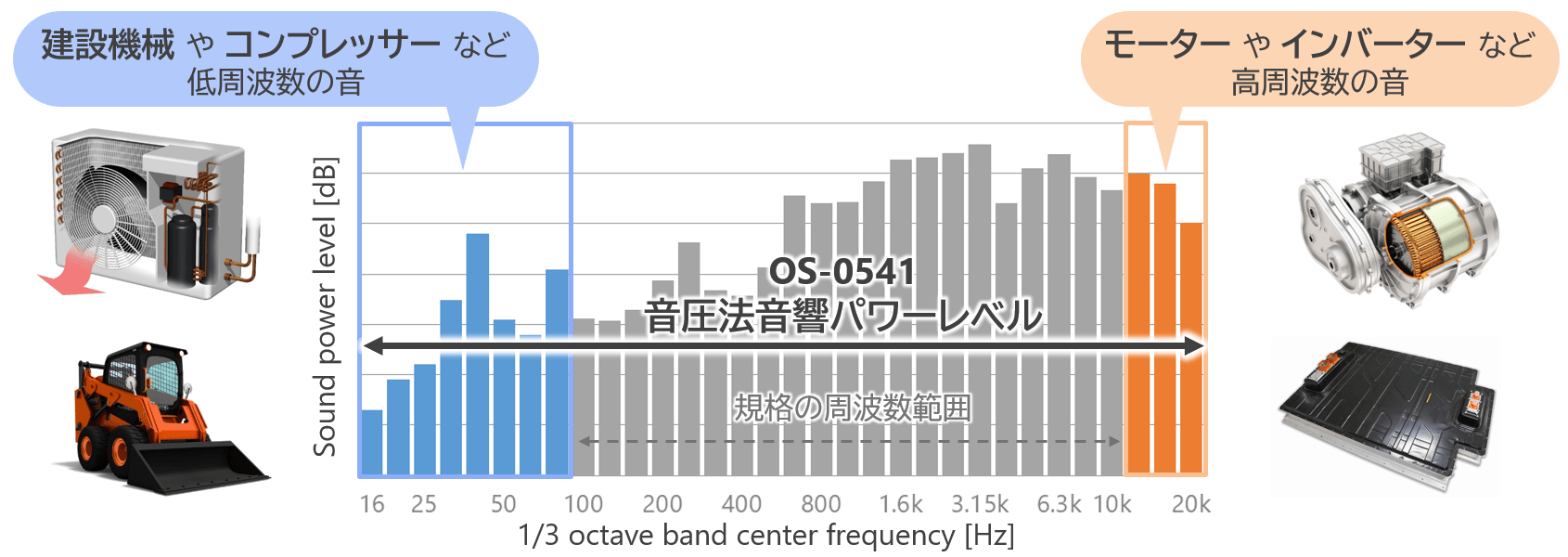
This system is an upgrade of the measurement system that combines the application software "OS-0541 Sound Pressure Method Acoustic Power Level," released in February 2024, and the Sound and Vibration Analysis System "O-Solution・DS-5000." It has quickly adapted to the newly revised international standard ISO 3744:2025, which has been updated for the first time in 15 years. Additionally, it supports wideband measurements that exceed the standard range, allowing for the measurement of low-frequency sounds from construction machinery and compressors, as well as high-frequency sounds from motors and inverters, which are issues in the automotive field. Furthermore, it enables easy visualization of sound sources and frequency peaks, thereby improving the efficiency of analysis work and contributing to a reduction in engineering man-hours.
Sound Power Level: This is an indicator that shows the total amount of energy emitted by a sound source. It can be evaluated as an absolute noise value, unaffected by the measurement location or environment. This value is widely used as a global indicator in environmental labels (Eco Mark, Blue Angel), noise regulations, and as a representation of operating noise in product catalogs. The measurement method is defined by international standards.
three points
- Compliant with the latest international standard ISO 3744:2025.
- It is possible to calculate acoustic power levels that cover a wider bandwidth (low frequency and high frequency) than specified.
- Intuitive understanding of the sources and causes of noise through FFT analysis and sound pressure level distribution display.
target market
- Office equipment, air conditioning equipment, home appliances, and other products that particularly require quietness.
- Next-generation mobility, such as eAxles installed in EVs, faces challenges related to high-frequency bands.
- Construction machinery, generators, and outdoor machinery that predominantly operate in the low-frequency range.
Background of Development
Sound power levels can be measured as the total energy emitted by equipment, making them widely used as a benchmark for the operational sound levels of devices and for noise reduction guidelines. This measurement method is defined by international standards, and reliable measurements in accordance with the latest standards are essential for equipment distributed both domestically and internationally, such as air conditioners, office equipment, and automotive parts. Therefore, this system has quickly adapted to the latest international standard ISO 3744:2025, which has been revised for the first time in 15 years. Customers can perform reliable measurements in accordance with the latest standards.
Overview of Specification Revision
Multiple international standards are established for measuring acoustic power levels, depending on the required accuracy (grade) and measurement environment. Among them, ISO 3744 is the most frequently cited practical method (grade 2), with techniques such as measuring at 10 points on a hemispherical surface being representative.
This ISO 3744 was revised in December 2025. The recent revision has streamlined complex regulations, simplifying the main text of the standard. Additionally, changes have been made regarding the testing environment and criteria for determining background noise. (For an overview of the revision, please refer to our company website)
Features
Compliant with the latest international standard ISO 3744:2025.
Measurements of acoustic power levels, which are international indicators, can be conducted in accordance with the latest standards. It is easy to perform measurements that comply with the standards and generate report outputs.
-
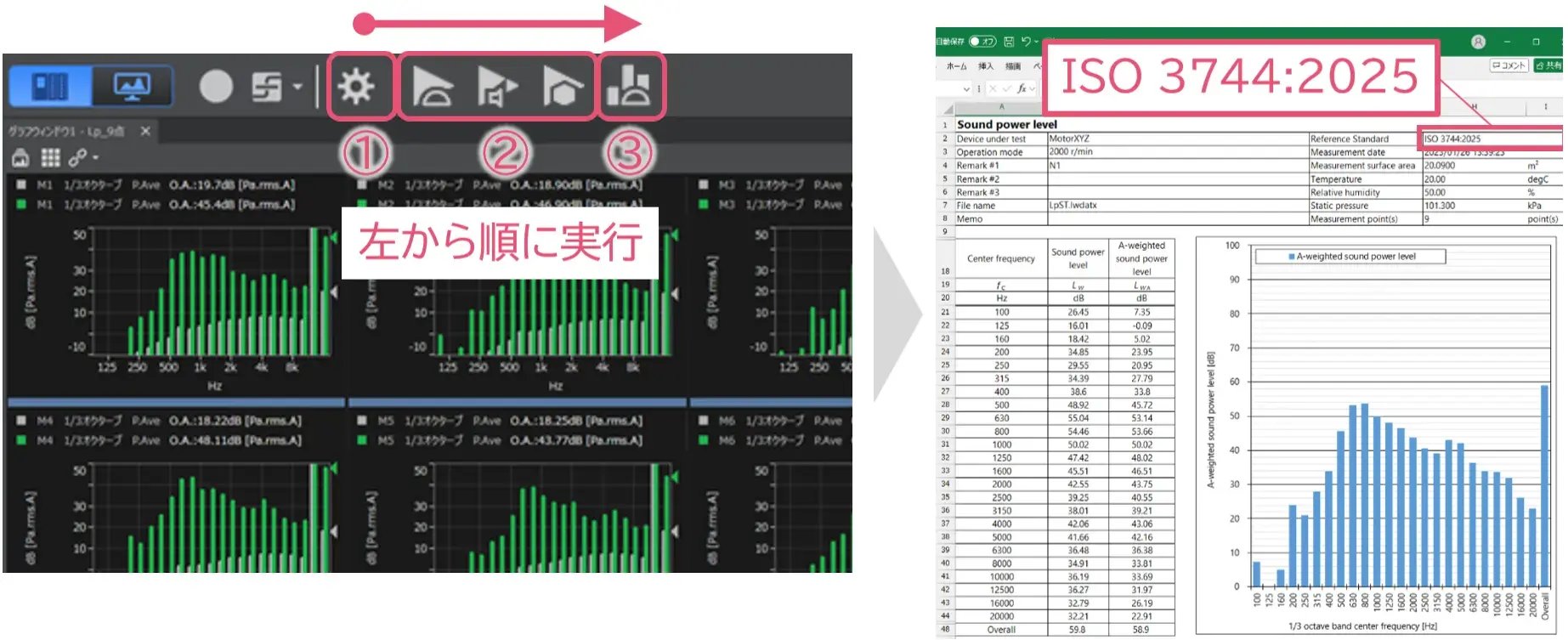
Software screen images and report output
Supports calculations up to 20 kHz in 1/3 octave.
It supports a wider frequency range than the general standard frequency range (100 Hz to 10 kHz) ※ 1. It can cover low-frequency sounds to high-frequency sounds, and can also be used for customer-specific shipping inspections and quality checks.
Contribute to the analysis of concerning noise causes.
-
simultaneous recording
-
FFT, instantaneous sound power level calculation ※2
-
Sound Pressure Level Distribution Display
This system can perform acoustic power level measurement and cause analysis using a single software. By observing more detailed acoustic power levels than the standard octave results, it enables efficient identification of frequency peaks, timing, and sound source locations that cause the sound. It allows for cause analysis without the hassle of re-measurement, leading to cost reductions in noise testing.
-
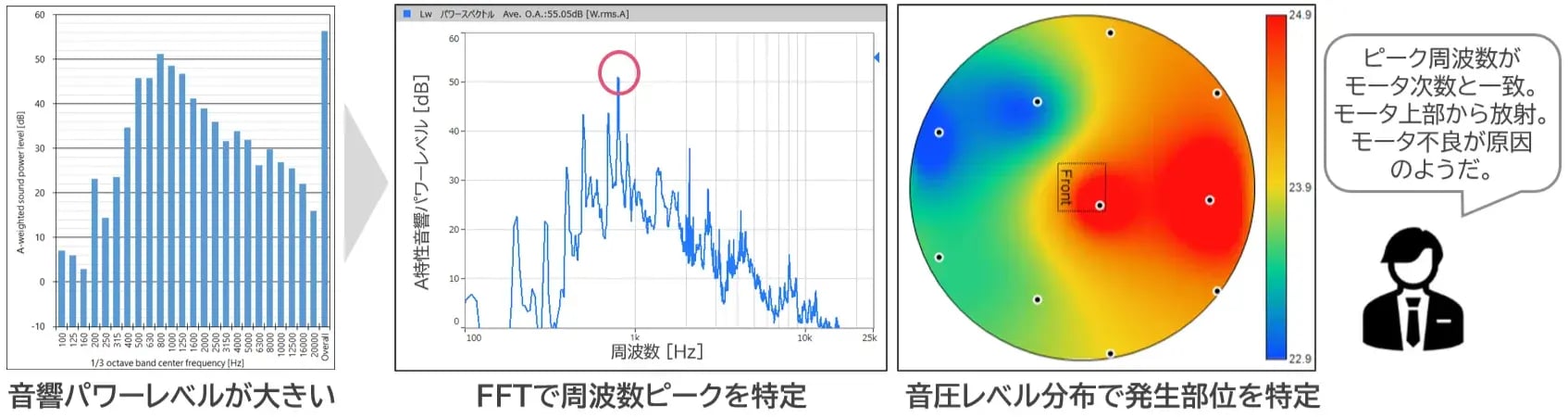
Image diagram of cause analysis
*1 The extension of the frequency range assumes that the test environment is compatible with the extended frequency range.
*2 Although corrections for standard background noise and area are made, the calculations are done with a more detailed frequency/time resolution than the standard, so they are not strictly compliant with the standard but are reference values.
Corresponding international standards
It complies with the standards for measuring sound power levels using microphones. An additional option is available for measuring the radiated sound of office equipment such as multifunction devices and printers.
-
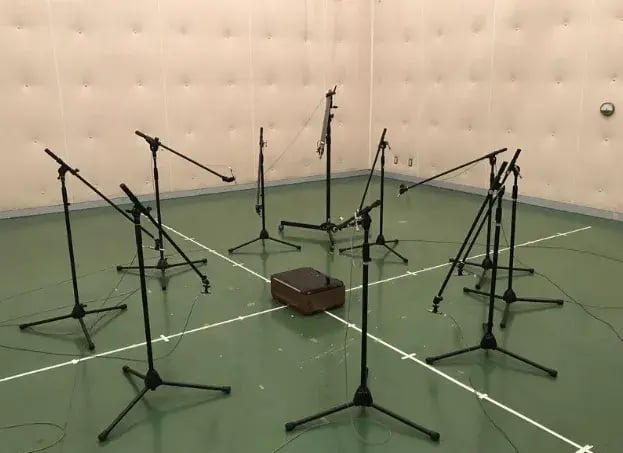
Measurement scene (the photo is an image).
OS-0541 Sound Pressure Method Acoustic Power Level
| Free sound field; semi-free sound field | Grade 1 (Precision Method) | ISO 3745:2012, JIS Z 8732:2021 |
| Grade 2 (Practical Application) | ISO 3744:2025, JIS Z 8733:2000 | |
| Grade 3 (Simplified Method) | ISO 3746:2010 | |
| Diffuse sound field (compatible only with comparative methods) | ISO 3741:2010, JIS Z 8734:2021 | |
| High frequency acoustic power level | ISO 9295:2015 |
OS-0542 Radiation Sound Measurement Option (Information Technology Device)
| Acoustic power level of information technology devices | ISO 7779:2018, JIS X 7779:2012 | |
| radiated sound pressure level | ISO 11201:2010 | |
| Radiation Noise Display Value | ISO 9296:2017 | |
| prominent discrete sound | ISO 7779:2018 (Tone-to-Noise Ratio, Prominence Ratio) | |


